Wednesday, July 1, 2015

Eid-ul-Fitr is celebration at the end of Ramadan

Eid-ul-Fitr is celebration at the end of Ramadan


What is Eid-ul-Fitr?

The arabic name Eid al-Fitr means 'festival of the breaking of the fast' in English. It marks the end of the month-long fast of Ramadan, and the beginning of the Islamic month of Shawwal. Like other festivals observed by the Muslim community, this festival symbolizes faith.

When is Eid-ul-Fitr?

Ramadan ends with the festival of Eid al-Fitr, which can be on July 18 or 19 2015. Eid al-Fitr is one of the two most important Islamic celebrations (the other occurs after the Hajj, or pilgrimage to Mecca).

How is Eid-ul-Fitr celebrated?

Eid is celebrated on the first date of Shawwal, that is, the tenth month of the Hijra calendar. During the festival, Muslims exchange gifts, greeting their neighbours as a mark of solidarity and brotherhood.

According to the Islamic tradition, there are two festivals observed by Muslims every year - Eid-ul-Fitr just after Ramzan and Eid-ul-Zuha in the month of Haj.

Ramzan, the month of fasting, symbolizes a lot practices and beliefs of the community. It is not merely restraining oneself from having food but also to abstain from all kinds of evil and unlawful practices in Islam.

Muslims, just before the celebrations of Eid-ul-Fitr, keep a month long fast throughout the month of Ramzan. The practice of fasting is also known as 'roza' that starts from the break of dawn till dusk and during this whole day an individual has to refrain hinself from drinking, eating or having sexual intercourse. The term 'roza' us an Arabic word means abstinence. This year Eid-ul-Fitr will be celebrated on August 20 to mark the end of Ramzan, the Islamic holy month of fasting.

The month long fasting ends with the festival of Eid-ul-Fitr that symbolizes a reward for their fasting.

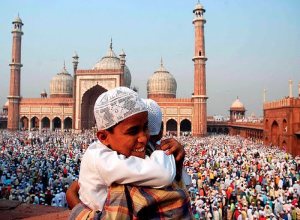
Muslims on this day wear their best clothers and offer 'namaz' a congregational prayer at masjids or mosques. After offering their prayers they exchange good wishes of the festival with their neighbours and other people. They also donate alms to the poor on the auspicios occasion.

The celebration of Eid-ul-Fitr not only has religious essence but also carries a social connotation.

Like other festivals, Eid-ul-Fitr is also observed with great enthusiasm. Delicious food and drinks are an indispensable part of the festivity. People decoare their houses and prepare luscious traditional sweets and cuisines to celebrate the festival. The most common recipe in this festival is the delicious meethi seviyan (Sweet Vermicelli) prepared from various healthy and mouth-watering ingredients.

The celebration of Eid-ul-Fitr is no-doubt perks up the spirit inherent in all the festivity. The significance of this festival is also interpreted as a good time to bring people together in harmony and gratitude.

Method for performing the
Eid-ul-Fitr Prayer

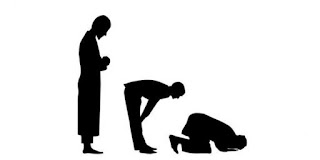
The method is to make intention for Eid-ul-Fitr or Eid-ud-Duha for two Rakats Wajib and then lift your hands up to your ears and say ‘Allahu Akbar’ and then fold them below the navel as normal.

Now pray ‘Sana’ and then say Allahu Akbar and lift your hands up to your ears and release them and again lift your hands and say Allahu Akbar and release them again and then lift your hands again and say Allahu Akbar and then fold them.

This means fold your hands after the first and fourth Takbeer and in the second and third Takbeers release your hands. The best way to remember is that if the Imam shall recite after the Takbeer then fold your hands and when he shall not recite (after a Takbeer) release your hands and hang them on the side.

After folding your hands after the fourth Takbeer the Imam will silently recite ‘A’udhubillah’ and ‘Bismillah’ and then he will pray Surah al-Fatiha (‘Alhamd Sharif’) and a Surat loudly and then go into Ruku and Sijdah and (thus,) complete one Rak’at (unit).

Then in the second Rak’at the Imam will first pray the Alhamdu and a Surat then lift your hands to your ears and say Allahu Akbar and release them; and do not fold them and repeat this twice. Therefore a total of three times the Takbeer shall be said. On the fourth time say Allahu Akbar and without lifting your hands go into Ruku.

This therefore means that in the Eid prayer there are six extra Takbeers; three before Qira’at (recitation) and after Takbeer-e-Tahrima in the first Rak’at and three after Qira’at in the second Rakat and before the Takbeer for Ruku.

Also in all the extra Takbeers you must lift your hands and between two Takbeers a gap of three Tasbeehs should be made and it is Mustahab in the Eid prayer to recite after Alhamdu, ‘Surah al-Jumu’ah’ in the first Rak’at and ‘Surah al-Munafiqun’ in the second or in the first pray ‘Sabbih Isma Rabbik al-A’la’ and in the second ‘Hal Ataaka Hadeethul Ghasihiyah’. [al-Durr al-Mukhtar Pgs. 113-114, Bahar-e-Shari’at]

Method of performing the Eid prayer has been taken from the English version of the book “Qanoon-e-Shari’at”, by ‘Allama Shamsul ‘Ulama Shamsuddin Ahmed al-Radawi, the student of Sadr al-Shari’ah, Allama Mufti Amjad ‘Ali al-‘A’azmi.
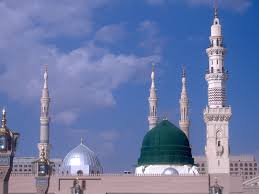
Hadiths regarding SHAB E MERAJ

Hadiths regarding SHAB E MERAJ

The Night of Ascension regarding Hadiths:

The story of the Al-Miraj goes that the beloved Prophet (PBUH) was asleep one night towards the end of his prophetic course in Makkah when he was wakened by the angel Gabriel(as) who cleansed his heart before bidding him alight on a angelic horse named Buraq.

Sahih Muslim, Vol. 1, p. 101

I was brought al-Burg who is an animal white and long, larger than a donkey but smaller than a mule, who would place his hoof at a distance equal to the range of vision. I mounted it and came to the Temple (Bait-ul Maqdis in Jerusalem), then tethered it to the ring used by the prophets.

The journey from Makkah to Jerusalem is known as al-Isra, "the night journey". At Jerusalem the Prophet(PBUH) was tested in the following way by Gabriel(as).

Sahih al-Bukhari, Vol. 6, p. 196

Allah's Apostle was presented with two cups, one containing wine and the other milk on the night of his night journey at Jerusalem. He looked at it and took the milk. Gabriel said, "Thanks to Allah Who guided you to the Fitra (i.e. Islam); if you had taken the wine, your followers would have gone astray".

After this began al-Mi'raj, "the ascent". The Prophet(PBUH) passed the sea of kawthar, the sea of "abundance", and then met various prophets, from Adam(as) to Abraham(as), as well as a variety of angels as he passed through the seven heavens. After this Gabriel(as) took him to the heavenly lote-tree on the boundary of the heavens before the throne of Allah.

Sahih al-Bukhari, Vol. 5, p. 147

Then I was made to ascend to Sidrat-ul-Muntaha (i.e. the lote-tree of the utmost boundary). Behold! Its fruits were like the jars of Hajr (i.e. a place near Medina) and its leaves were as big as the ears of elephants. Gabriel said, "This is the lote-tree of the utmost boundary".

Gabriel(as) and Buraq could go no further but the Beloved Prophet(PBUH) went on to the presence of Allah where he was commanded to order the Muslims to pray fifty times a day:

Sahih al-Bukhari, Vol. 1, p. 213

Then Allah enjoined fifty prayers on my followers. When I returned with this order of Allah, I passed by Moses who asked me, "What has Allah enjoined on your followers?" I replied, "He has enjoined fifty prayers on them". Moses said "Go back to your Lord (and appeal for reduction) for your followers will not be able to bear it".

The Prophet(PBUH) went back and forth between Allah and Moses(as) till the prayers were reduced to five per day. Moses(as) then told him to seek yet a further reduction but The prophet stopped at this point and answered Moses:

Ibn Ishaq, Sirat Rasulullah, p. 187

I replied that I had been back to my Lord and asked him to reduce the number until I was ashamed, and I would not do it again.

Allah then said whoever observed the five times of prayer daily would receive the reward of fifty prayers. The Prophet(PBUH) then saw some of the delights of paradise as he returned to Gabriel(as) and Buraq and then beheld the torments of the damned before going back to his home in Makkah that same night. This, briefly, is the narrative of the ascent.

The Qur'an also supports this miraculous journey.

Glory to (God) Who did take His Servant for a Journey by night from the Sacred Mosque to the Farthest Mosque whose precincts We did bless, - in order that We might show him some of Our Signs: for He is the One Who heareth and seeth (all things). Surah 17.1

The "Sacred Mosque" (al-masjidul-haram) is interpreted to be the Ka'aba at Makkah and the "Farthest Mosque" (al-masjidul- aqsa) the Temple at Jerusalem. The great mosque which presently stands next to the Dome of the Rock is accordingly known today as the "al-Aqsa" mosque.
A Useful Guide to Halal Food as per Islamic Law

A Useful Guide to Halal Food as per Islamic Law


 What is the meaning of Halal?

HALAL in general term means permitted, allowed, authorized, approved, sanctioned, lawful, legal, legitimate or licit. The word ‘Food for Muslims’ or ‘food certified Halal’ or ‘Halal’ means it can be had or permitted for eating and must be carry all the legal documents for verification

Prophet(s) Muhammad is reported to have said:
"Halal is clear and Haram is clear; in between these two are certain things that are suspected. Many people may not know whether those items are Halal or Haram. Whosoever leaves them, he is innocent towards his religion and his conscience. He is, therefore, safe. Anyone who gets involved in any of these suspected items, he may fall into the unlawful and the prohibited. This case is similar to the one who wished to raise his animals too close to a restricted area, so that the animals may step into that area. Indeed for every landlord there is a restricted area. Indeed the restriction of Allah are the Haram." (Sahih Bukhari & Sahih Muslim)

For a product to be Halal(lawful) for Muslim consumption all its ingredients should be Halal. Follow the following list:

1. Read the ingredients on label carefully. Ingredients are listed according to the amounts present.

The first ingredient listed is present in the largest amount.

2. Identify the Halal/Haram/Mushbooh status of each ingredient using this guide.
3. Search the ingredient name in the list and its status will be next to it.
4. If all ingredients of a product are Halal, the product is fit for Muslim consumption.
5. If any of the ingredient is Haram, the product should not be consumed.
6. If any ingredient falls under Mushbooh category avoid this product, as the Prophet has advised us to avoid doubtful matters. This ingredient could come from a Haram source. To find out the status of this ingredient you should write or call the manufacturer of the product
SALAAT (NAMAZ) IS THE PILLAR OF ISLAM AND HAS GOT TEN VIRTUES

SALAAT (NAMAZ) IS THE PILLAR OF ISLAM AND HAS GOT TEN VIRTUES

Hadharat Abu Hurairah (Radhiyallaho anho) narrates that he heard the Prophet (SAW) saying: There is no place in ISLAM for a person who does not offer his SALAAT and there is no SALAAT without WUDHU.

The position of SALAAT in ISLAM is a position of head in a body.

The position of salaat in jamaat is twenty-seven times more and in some hadith it is mentioned twenty-five times more, why is the difference?

* This variation is due to variation of ikhlaas (sincerity) in different individuals
* In Sirri (quiet ) salaat i.e. zohr and asr it is twenty-five times, while in Jahri(loud) salaat i.e fazr,magrib and Ishaaa it is twenty-seven times.
* In fazr and ishaa, when it is somewhat inconvenient to go out in cold and darkness, it is twenty –seven times.
* In the beginning it was twenty-five times but subsequently ALLAH favour on the followers has it been raised to twenty-seven times.

Muhammad bin Samaak (Rahmatullah alaiho) is a famous theologian and sheikh. He died at 103. He used to perform two hundred rakaats of nafil salaat daily. He writes : For forty years he never missed the first takbeer of salaat with jammat ,except once when my mother died .Once I missed the salaat with jammat .As I knew that the salaat was twenty-seven times superior, I repeated this salaat individually for twenty-seven times to make up the loss.

The Prophet (SAW) said:

SALAAT IS THE PILLAR OF ISLAM AND HAS GOT TEN VIRTUES:

1. It is the charm on the face
2. A light in the heart
3. health and refreshment for the body
4. a company in the grave
5. a key in the heaven
6. a means of willingly ALLAH pleasure
7. it establishes deen and the one who neglets demolishes it
8. a price of paradise
9. descent of ALLAH's mercy
10. A weight of scale of good deeds.

The angels address a person who misses

FAJIR NAMAAZ AS O U WRONG DOER
ZUHR NAMAAZ AS O U LOSER
ASR NAMAAZ AS O U TRANSGRESSOR
MAGRIB NAMAAZ AS O U KAAFIR
ISHAA NAMAAZ AS O U VOILATOR OF ALLAHS COMMANDMENTS.

Tuesday, June 30, 2015

The Spiritual and Moral Benefits of Fasting

The Spiritual and Moral Benefits of Fasting

1. It brings a fasting man/woman closer to his/her Creator (Allah).

2. One develops a sense of love for the Holy Quran, as this month brings along with it an opportunity towards a special dedication, and also a love towards its recitation, understanding an remembrance.

3. Lailat-ul-Qadr (i.e., the Night of Majesty) falls in this month, and provides an opportunity for acceptance of prayer.

4. I'tikaf, i.e., staying in the mosque for the last ten days of this month (Ramazan), is observed, and in doing so one gets a better concentration and more time towards praying, reciting the Holy Quran and undergoing other religious activities.

5. Punctuality in the five obligatory prayers helps one develop a habit of offering one's prayers regularly and punctually.

6. The Tahajjud prayer is more widely observed. The faithful leave their warm beds in search of the Bliss of Allah.

7. The Tarawih prayer is an event that allows faithful to hear the Holy Quran from beginning to end.

8. The fasting Muslim learns to obey every command of Allah, the "Supreme Commander", both publicly and privately.

9. One refrains from evil deeds while one is fasting.

10. One is prepared for radical changes in one's life, as the advent of this month brings similar changes to one's daily schedule.

11. One develops a sense of unity and brotherhood with fellow Muslims all over the world by sharing the same spiritual experience (i.e., of fasting).

12. One obeys the saying of the Holy Prophet Muhammad, peace and blessings of Allah be upon him, by following his advice to refrain from harming one's fellow Muslims, physically and/or verbally.

13. Equality and uniformity is observed, as both black and white, wealthy and poor, master and servant, act according to the will of Allah.

14. The wealthy realise the essence of the word hunger, and thus become more dutiful towards the rights of the poor, the orphans, the widows and the needy. Thus one is more mindful towards the giving of charity and bringing about other pious deeds that can alleviate the miseries of the poor.

15. It develops the habit of eating moderately and avoiding wastage of food.

16. Allah forgives the previous sins of the fasting men and women when they seek His forgiveness.

17. Owing to a fasting person's pious acts, fellow-people love him and thus the foundation of a solid and healthy brotherhood is laid down.

Monday, June 29, 2015

What Is Ramadan and How and Why do a Muslim Fast ?

What Is Ramadan and How and Why do a Muslim Fast ?

What Is Ramadan and How and Why do a Muslim Fast


Ramadan is the ninth month of the Islamic calendar. Every day of this month, Muslims fast on the day from sun rise to sun set. In the night Muslims gather together to offer Namaz or Prayers in Masjid . These night prayers are called Taraveeh

“Islam is built on five (pillars), testimony that there is no deity worthy of worship but Allah, and testimony that Muhammad is His messenger, establishing Salat, giving Zakaat, observing the fast of Ramadan, and pil­grimage to the House of Allah.” (Bukhari/Muslim)

The hadith established fasting during the month of Ramadan as one of the pillars on which this religion is built. This hadith re­inforces the obligation of fasting as stated in Al-Qur'an. We will see later that there are other Hadiths that explain in detail how to observe the 'Ebadah, the worship of fasting.

“Ramadan is the month in which was sent down the Qur'an as a guide to humanity and as a clear 18 sign for guidance and judgment (between right and wrong). So anyone of you who witnesses the month should spend it in fasting...” (Al-Qur'an, 2:185)

This verse contains important rules and reasons for fasting that will be explained later. However, what concerns us here is the statement,

“So anyone of you who witnesses the month should spend it in fasting.”

WHY DO A MUSLIM FAST?

Fasting is one of the best acts of worship. It is mandated by Al­lah (SWT) to purify the soul along with the practice of good deeds. Thus the faster ought to be aware of acts or behaviors that may spoil his fast so that he or she will attain the highest benefit physically and spiritually.

Fasting is not only restraining oneself from fast-breakers ­food, drink and sex -that restrain only the mouth and the pri­vate parts. Every limb (jawarih) must be restrained. The tongue must desist from slander and back-biting. The eyes must re­strain themselves from any unlawful look. The hand must not touch or take what does not belong to it. The ears must not lis­ten to idle talk, gossip, lyrics and notes that contain obscene and indecent things; the nose must fast also by not sniffing, smelling unlawful things. The feet must fast by not going to places where sinful acts are propagated.

When you eat sahuur and iftar, make sure the food on the table has been obtained lawfully. If the servant has observed the fast in these terms and acted accordingly, he or she will have

gained positively by Ramadan and will receive the maximum reward. Hence, fasting is a state of mind that transcends the physical restraint.

In a hadith by Abu Hurairah, the Messenger of Allah (saas) said:

“It is not fasting, just to restrain from food and drink, instead the fast is to cease from idle talk, ob­scenity, and should anyone insult or provoke you, or act ignorantly towards you, respond to it by saying, ‘I am fasting, I am indeed fasting.’ ” (Ibn Khuzaimah)

The fast is intended to bring the faithful closer to God and to remind them of the suffering of those less fortunate. Muslims often donate to charities during the month and feed the hungry.

Fasting is an exercise in self-restraint. It's seen as a way to physically and spiritually detoxify by kicking impulses like morning coffee, smoking and midday snacking.

Ramadan is a time to detach from worldly pleasures and focus on one's prayers. Many Muslims dress more conservatively during Ramadan and spend more time at the mosque than at any other time of the year.

Fasting during Ramadan is one of the five pillars of Islam, along with the Muslim declaration of faith, daily prayer, charity, and performing the hajj pilgrimage in Mecca.

HOW DO MUSLIMS FAST?

Observant Muslims abstain from eating and drinking from dawn to dusk for the entire month of Ramadan, with a single sip of water or a puff of a cigarette considered enough to invalidate the fast.

Muslim scholars say it's not enough to just avoid food and drinks during the day, though. Spouses must abstain from sexual intercourse during the day, and Muslims should not engage in road rage, cursing, fighting or gossiping.

Muslims are also encouraged to observe the five daily prayers on time and to use their downtime just before breaking their fast at sunset to recite Quran and intensify remembrance of God.

To prepare for the fast, Muslims eat what is commonly called "suhoor," a pre-dawn meal of power foods to get them through the day.

HOW DO MUSLIMS BREAK THEIR FAST?

Muslims traditionally break their fast like the Prophet Muhammad did some 1,400 years ago, with a sip of water and some dates at sunset. That first sip of water is by far the most anticipated moment of the day.

After a sunset prayer, a large feast known as "iftar" is shared with family and friends. Iftar is a social event as much as it is a gastronomical adventure. Across the Arab world, juices made from apricots are a staple at Ramadan iftars. In South Asia and Turkey, yogurt-based drinks are popular.

Across the Muslim world, mosques and aid organizations set up tents and tables for the public to eat free iftar meals every night of Ramadan.

Typically, the start of the month is welcomed with greetings such as "Ramadan mubarak!" (AP Photo)

CAN MUSLIMS BE EXEMPTED FROM FASTING?

Yes. There are exceptions for children, the elderly, the sick, women who are pregnant or menstruating and people traveling, which could include athletes during tournaments.

Many Muslims, particularly those who live in the U.S. and Europe, are accepting and welcoming of others around them who are not observing Ramadan. They also are not expecting shorter work hours, as is the case in the public sector across much of the Arab world during Ramadan.

However, non-Muslims or adult Muslims who eat in public during the day can be fined or even jailed in some Middle Eastern countries, such as Saudi Arabia and the United Arab Emirates, home to large Western expat populations in Dubai and Abu Dhabi.

Meanwhile, minority Chinese Uighur Muslims complain of heavy restrictions by the Communist Party, such as bans on fasting by party members, civil servants, teachers and students during Ramadan, as well as generally enforced bans on children attending mosques, women wearing veils and young men growing beards.

WHAT ARE SOME RAMADAN TRADITIONS?

Typically, the start of the month is welcomed with greetings such as "Ramadan mubarak!" Another hallmark of Ramadan is nightly prayer at the mosque among Sunni Muslims called "taraweeh."

In Egypt, a common sight during Ramadan is a lantern called the "fanoos," which is often the centerpiece at an iftar table and can be seen hanging in window shops and balconies.

In the Arabian Gulf countries, wealthy sheikhs hold "majlises" where they open their doors for people to pass by all hours of the night for food, tea, coffee and conversation.

Increasingly common are Ramadan tents in five-star hotels that offer lavish and pricey meals from sunset to sunrise. While Ramadan is a boon for retailers in the Middle East and South Asia, critics say the holy month is increasingly becoming commercialized.

Scholars are also disturbed by the proliferation of evening television shows during Ramadan. In Pakistan, live game shows give away gifts promoting their sponsors. In the Arab world, monthlong soap operas starring Egypt's top actors rake in millions of dollars in advertising.

HOW DO MUSLIMS MARK THE END OF RAMADAN?

The end of Ramadan is marked by intense worship as Muslims seek to have their prayers answered during "Laylat al-Qadr" or "the Night of Destiny." It is on this night, which falls during the last 10 nights of Ramadan, that Muslims believe that God sent the Angel Gabriel to the Prophet Muhammad and revealed the first versus of the Quran.

Some devout Muslims go into reclusion those final days, spending all of their time in the mosque.

The end of Ramadan is celebrated by a three-day holiday called Eid al-Fitr. Children often receive new clothes, gifts and cash.

Muslims attend early morning Eid prayers the day after Ramadan. Families usually spend the day at parks and eating — now during the day.

Friday, June 26, 2015

Pay your Zakaat and secure your Wealth

Pay your Zakaat and secure your Wealth

Allah's Name (we) begin with, The Compassionate Most Merciful

As Salaatu Was Salaamu Alaika Ya Rasool'Allah صلٰى الله عليه و سلم

Abu Dawud report from Hasan Basri Radi Allahu anhu and Tabrani and Baihaqi have reported from a huge Jama’at of Sahaba-e-Kiraam Radi Allahu ta'aala Anhum that Rasoolullah Sall Allahu alaihi wa Sallam said, ‘Give your Zakaat and fortify your wealth in powerful fortresses, and treat your ill through Sadaqa, and when evil descends, then seek assistance in Dua (supplication) and lamentation.’

Law:  Making it Mubah (lawful) does not fulfil the Zakaat.  For example, if a Faqeer is fed some food with the Niyyat of Zakaat, the Zakaat has not been discharged, because in doing so the (condition) of making him the Maalik (Owner) is not existent.  If one gave him the food; in the sense that he may either eat it or take it with him, so in this case, it (Zakaat) has been discharged.  Similarly, if he gave (the Faqeer) a house to live in with the Niyyat of Zakaat, the Zakaat will not be discharged.  [Durr-e-Mukhtar vol.2 pg.3]

Law:  If one gave a Faqeer a house to live in, the Zakaat will not be discharged, because in doing so he has not given him any portion of the asset (i.e. in this case the property), but rather, he has simply made him the owner of the benefit.  [Durr-e-Mukhtar vol.2 pg.3]

MASLAK E AALA HAZRAT
ZINDA BAAD!

JUMMAH MUBAARAK

Sag e Mufti e Azam

Muhammad Afthab Cassim Qaadiri Razvi Noori

Imam Mustafa Raza Research Centre, Durban, South Africa

Thursday, June 25, 2015

Islamic Names for Boys starting with A

Islamic Names for Boys starting with A

Muslim Boys Name Starting with A

A’zam Most great; most pious; most exalted.
Aaaqil Wise; intelligent; sensible.
Aaban Name of the Angel.
Aabid Worshiper; devotee; devout.
Aabid Worshiper.
Aadam Name of the first man and prophet of Allah; father of mankind.
Aadil Just
Aadil Just; upright; sincere
Aadil Just, Upright.
Aafiya Good Health.
Aahil Prince.
Aalam The world; the universe
Aalam World.
Aalee Sublime, high.
Aalim Religious Scholar.
Aamil Doer, Work man.
Aamir One who inhabits; one who performs Umrah; of a sahaabi.
Aamir Populous, Full, Prosperous
Aamir Civilised.
Aamirah Inhabitant
Aaqib Follower.
Aaqil Intelligent.
Aarif Acquainted, Knowledgable
Aarif One who possesses knowledge of Allah and His kingdom; a devotee.
Aarif Knowing, aware.
Aariz Respectable man.
Aaryan Of Utmost strength.
Aashif Bold, courageous.
Aashir Living.
Aasif Name of a courtier
Aasif An able minister.
Aasim Chaste; protected; safe; name of a great Imaam of Tajweed.
Aasim Protector
Aasim Person who keeps away from sins.
Aatif Kind Affectionate.
Aatiq Free; liberated; independent.
Aaus Name of a tree.
Aayan God's gift.
Aazim Determined.
Abaan Old Arabic name
Abbaas A furious lion that mauls its prey to pieces; pomp;
Abbas Description of a lion
Abbas Gloomy look.
Abd A servant; a devotee; a slave.
Abd Al-Ala Slave of the High.
Abdul Aalee Servant of the Most High.
Abdul Adl Slave of the just.
Abdul Afuw Slave of the one who pardons.
Abdul Ahad Slave of he who is one (Allah).
Abdul Aleem Servant of the Omniscient.
Abdul Ali Slave of the High one.
Abdul Alim Slave of the All knowing.
Abdul Awwal Slave of the First One.
Abdul Azeem Servant of the Mighty
Abdul Azeez The servant of the most powerful.
Abdul Azim Slave of the great.
Abdul Aziz Servant of the powerful one.
Abdul Baari Servant of the Creator.
Abdul Baasit Servant of the Extender and Creator.
Abdul Badee Slave of the originator.
Abdul Baith Slave of the one who raises death.
Abdul Baqi Slave of the Eternal.
Abdul Bari Slave of the creator.
Abdul Baseer Slave of the All-seeing.
Abdul Batin Slave of the unseen.
Abdul Fattah Slave of the opener, slave of the giver of victory.
Abdul Ghafaar Servant of the Forgiver
Abdul Ghafoor Servant of the Forgiver
Abdul Hafeez Slave of the Protector.
Abdul Hafiz Slave of the Guardian.
Abdul Hakam Servant of the Arbitrator
Abdul Hakeem Servant of the Wise
Abdul Haleem Servant of the Mild and Patient
Abdul Halim Slave of the Wise.
Abdul Hameed Servant of the Praiseworthy and the Ever-Praised
Abdul Hamid Slave of the Praiseworthy.
Abdul Hannan Slave of the Merciful.
Abdul Haq Servant of the Truth
Abdul Haseeb Servant of the Respected and Esteemed
Abdul Hasib Slave of the Reckoner.
Abdul Hayy Slave of the Living.
Abdul Jabaar Servant of the Mighty.
Abdul Jaleel Servant of the Great and Revered
Abdul Jawwad Slave of the Bountiful.
Abdul Kabir Slave of the Great.
Abdul Kareem Servant of the Noble and Generous
Abdul Karim Slave of the Gracious.
Abdul Khabir Slave of the one who is aware.
Abdul Lateef Servant of the Kind
Abdul Maajid Slave of the Excellence.
Abdul Maalik Slave of the Master, the Lord.
Abdul Majeed Servant of the Glorious
Abdul Mani Slave of one who prevents.
Abdul Mannan Slave of the Benefactor.
Abdul Mateen Slave of the Firm.
Abdul Mubdee Slave of the Originator.
Abdul Mueed Slave of the Restorer, the Reproducer.
Abdul Muhaimin Servant of the Supervising, the Guardian and the Protector
Abdul Muhaymin Slave of the Protector.
Abdul Muhsin Slave of the Benefactor.
Abdul Muhyee Slave of the one who gives life and sustains it.
Abdul Muiz Servant of the Giver of Might and Glory
Abdul Mujeeb Servant of the Responder
Abdul Munim Slave of the Generous.
Abdul Muntaqim Slave of him who punishes wrongdoings and seizes retribution.
Abdul Muqeet Slave of the Sustainer.
Abdul Muqsit Slave of the Just.
Abdul Musawwir Slave of the Fashioner.
Abdul Mutaal Servant of the Most High
Abdul Muti Slave of the Giver.
Abdul Muzanni He was a narrator of Hadith.
Abdul Nafi Slave of the Propitious.
Abdul Naseer Slave of the Helper.
Abdul Noor Slave of the one who is Light.
Abdul Qaadir Servant of the Capable
Abdul Qadeer Slave of the Powerful.
Abdul Qadir Slave of the Powerful.
Abdul Qahaar Servant of the Subduer and the Almighty
Abdul Qayyum Slave of the Self-Subsistent.
Abdul Qudoos Servant of the Most Holy
Abdul Raafi Servant of the One Who Raises (intellect, esteem), One who Elevates
Abdul Rabb Slave of the Lord.
Abdul Rafi Slave of the Exalter.
Abdul Raheem Servant of the Most Compassionate
Abdul Rahim Slave of the Compassionate.
Abdul Rahman Servant of the merciful one.
Abdul Raqib Slave of the Vigilant.
Abdul Rauf Servent of the merciful.
Abdul Tawwab Slave of the Acceptor of repentance, the relenting.
Abdul Waali Slave of the Governor.
Abdul Wahid Slave of the Unique.
Abdul Wajid Slave of the Finder, the Perceiver.
Abdul Wakil Slave of the Trustee.
Abdul Waliy Slave of the Protecting Friend.
Abdul Wasi Slave of the All Embracing.
Abdul-Aalee Servant of the Most High
Abdul-Aalee Servant of the Most High.
Abdul-Adheem Servant of the Most Great.
Abdul-Aleem Servant of the Omniscient
Abdul-Aleem Servant of the All-Knowing.
Abdul-Azeez Servant of the Mighty, the Powerful
Abdul-Baaqi Servant of the Everlasting.
Abdul-Baari Servant of the Creator
Abdul-Baari Servant of the Evolver.
Abdul-Baasit Servant of the Extender, Creator
Abdul-Baasit Servant of the Expander.
Abdul-Barr Servant of the source of Goodness.
Abdul-Dhahir Servant of the Manifest.
Abdul-Fataah Servant of the Opener (of the gates of sustenance)
Abdul-Ghafaar Servant of the Forgiver
Abdul-Ghaffar Servant of the forgiver.
Abdul-Ghafoor Servant of the Forgiver
Abdul-Ghafur Servant of the All-Forgiving.
Abdul-Ghani Servant of the Self-Sufficient.
Abdul-Haady Servant of the Guide
Abdul-Haafiz Servant of the Protector
Abdul-Hadi Servant of the Guide.
Abdul-Hafeedh Servant of the Preserver.
Abdul-Hakam Servant of the Arbitrator
Abdul-Hakeem Servant of the Wise
Abdul-Hakeem Servant of the Wise.
Abdul-Haleem Servant of the Mild, Patient
Abdul-Haleem Servant of the Forbearing One.
Abdul-Hameed Servant of the Praiseworthy, the Ever-Praised
Abdul-Hameed Servant of the Praiseworthy.
Abdul-Haq Servant of the Truth
Abdul-Haqq Servant of the Truth.
Abdul-Haseeb Servant of the Respected, Esteemed
Abdul-Haseeb Servant of the Reckoner.
Abdul-Jabaar Servant of the Mighty
Abdul-Jabbar Servant of the Compeller.
Abdul-Jaleel Servant of the Great, Revered
Abdul-Jaleel Servant of the Sublime One.
Abdul-Kareem Servant of the Noble, Generous
Abdul-Kareem Servant of the Most Generous.
Abdul-Khaaliq Servant of the Creator
Abdul-Khaliq Servant of the Creator.
Abdullah Servant of God
Abdullah Servant of Allah.
Abdul-Lateef Servant of the Kind
Abdul-Lateef Servant of the Subtle One.
Abdul-Majeed Servant of the Glorious
Abdul-Majeed Servant of the Most Glorious.
Abdul-Majid Servant of the Noble.
Abdul-Malik Servant of the Sovereign Lord.
Abdul-Mateen Servant of the Firm, Strong
Abdul-Mu'eid Servant of the Restorer.
Abdul-Mughni Servant of the Enricher.
Abdul-Muhaimin Servant of the Supervising, the Guardian, the Protector
Abdul-Muiz Servant of the Giver of Might and Glory
Abdul-Mu'izz Servant of the Honourer.
Abdul-Mujeeb Servant of the Responder
Abdul-Mujeeb Servant of the Responsive.
Abdul-Mumin Servant of the Guardian of Faith.
Abdul-Muqtadir Servant of the Powerful.
Abdul-Mutaal Servant of the Most High
Abdul-Muta'alee Servant of the Most Exalted.
Abdul-Nasser Servant of the Helper, Granting Victory
Abdul-Nur Servant of the Light.
Abdul-Qaadir Servant of the Capable
Abdul-Qaadir Servant of the Able.
Abdul-Qahaar Servant of the Subduer, the Almighty
Abdul-Qahhar Servant of the Subduer.
Abdul-Qaiyoum Servant of the Self-Sustaining.
Abdul-Quddus Servant of the Holy.
Abdul-Qudoos Servant of the Most Holy
Abdul-Raafi' Servant of the One Who Raises (intellect, esteem), Elevates
Abdul-Raheem Servant of the Most Compassionate
Abdul-Rahmaan Servant of the Mercifully Gracious
Abdul-Raouf Servant of the Most Merciful
Abdus Sami Slave of the All Hearing.
Abdus Sattar Slave of the one who conceals faults.
Abdus Shafi Slave of the Healer.
Abdus Subbooh Slave of the Extremely pure.
Abdush Shahid Slave of the Witness.
Abdus-Sabour Servant of the Patient.
Abdus-Salaam Servant of the Source of Peace.
Abdus-Samad Servant of the Eternal.
Abdus-Sameei Servant of the All-Hearing.
Abdus-Shaheed Servant of the Witness.
Abdus-Shakur Servant of the Appreciative.
Abed Worshipper
Abedin Worshippers
Abid Worshipper.
Abisali Warrior in Islam.
Aboo Aboo literally means father.
Aboo Ayyoob A well-known Sahaabi
Aboo Bakr Name of the first Khalifah of Islam, and the first amongst men to embrace Islam.
Aboo Haneefah The appellation of one of the four illustrious Imaams
Aboo Hurairah Name of an illustrious sahaabi
Aboo Taalib The name of Rasoolullah's sallallaahu-alayhi-wasallam uncle and father of Ali (RA).
Aboo Turaab The appellation of Ali (RA).
Aboo Ubaidhah Name of one of the ten sahaabah (RA)
Abraar pious people; truthful persons; saints.
Abrad Hail, Mail.
Abrar Peity.
Abrash Spotted, Speckled.
Absi The name of Abdullah ibn-Musa, a scholar and reciter of the Quran
Abt'hi One who lives in Abtah, a place near Makkah.
Abu Bakr The companion of Prophet Muhammad
Best ways for keeping Islamic names to boys and girls

Best ways for keeping Islamic names to boys and girls

Rules of naming a baby in Islam

Name of a the child plays very important role in his upbringing life.

Below hadiths tells us the importance of the names and its effects

Once Rasoolullah (Sallallaahu Álayhi Wasallam) called for a volunteer to milk a camel. Four persons volunteered: he refused to accept the services of the first three because their names did not imply pleasantness. The names of the first two were Murrah (bitter) while Jamrah (burning coal) was the name of the third person. When the fourth said his name is Yaeesh (long life) Rasoolullah (Sallallaahu Alayhi Wasallam) said to him: "Milk her."

The prophet (Sallallaahu Álayhi Wasallam) was very particular about it. The Prophet (Sallallaahu Álayhi Wasallam) has suggested names of the Prophets or Abdullah and Abdur Rahman.

Following are the hadiths on Importance of giving good names to a child:

HADITH: "On the Day of Qiyaamah you will be called by your (own) names and the names of your fathers. Therefore keep good names." Aboo Dawood.

HADITH: "To whoever is born a child, the child should be given a good name and sound education. And when he becomes of age he should be married."

Rules

1. Every child (person) should be identified by his/her father’s name.

Refer to following verse of Qur’an:

ادْعُوهُمْ لآبَائِهِمْ هُوَ أَقْسَطُ عِنْدَ اللَّهِ
“Call them by the name of their father; that is more just with Allah…”

2. The Names should be good and meaningful

3. The Names must be Most beloved to Allah

It was narrated that Ibn Umar (RA) said: Allah’s Messenger (PBUH) said, “The most beloved of names to Allah, the Mighty and Sublime, are: Abdullah and Abd-Ar-Rahman.”

4. Avoid prohibited Names like Rabah, Najih, Aflah, Nāfi and Yasār.
Zakaat and its Rules and Regulations

Zakaat and its Rules and Regulations

Allah's Name (we) begin with, The Compassionate Most Merciful

As Salaatu Was Salaamu Alaika Ya Rasool'Allah
صلٰى الله عليه و سلم

Imam Ahmed reports from Asma bint Yazid on the merit of it being a Hasan narration, that she said, ‘my aunt and I presented ourselves before Nabi Kareem Sall Allahu alaihi wa Sallam, and we were wearing gold bangles (bracelets).  He Sall Allahu alaihi wa Sallam asked, ‘Have you paid its Zakaat?’  We said, ‘No’.  He Sall Allahu alaihi wa Sallam said, ‘Do you not fear that Almighty Allah will let you wear bangles of fire?  Pay its Zakaat!’’

Abu Dawud reported from Samurah bin Jundub that Rasoolullah Sall Allahu alaihi wa Sallam would command us to pay Zakaat for that which we have acquired for trade purposes.

Law:  If gold and silver have been mixed together, then in this case if the gold is more (in quantity), it will be regarded as gold.  Alternatively, if both are equal, and the gold reaches the standard Nisaab, either by itself or after being mixed with the silver, it will then still be regarded as gold.  If the (quantity of) silver is more, it will be regarded as silver, and if it reaches the Nisaab, Zakaat will be paid on it as silver.  However, if there is such an amount of gold in it which is more than the price (value) of the silver, then in this case, all of it will be counted as gold.  [Durr-e-Mukhtar, Raddul Muhtar vol.2 Pg.43]

MASLAK E AALA HAZRAT
ZINDA BAAD!

Sag e Mufti e Azam
Muhammad Afthab Cassim Qaadiri Razvi Noori
Imam Mustafa Raza Research Centre, Durban, South Africa

Post your Comments

#Islamic Calendar 2025 Events

Islamic 2025 Event Name English Date Islamic Date
Urs Haji Malang January 2, 2025 - Thursday 10 Jumada al-Akhirah 1446
Urs Haji Ali Baba Mumbai January 4, 2025 - Saturday 12 Jumada al-Akhirah 1446
721st Urs Sharif Of Hazrat Khwaja Syed Nizamuddin Aulia Mehboob-e-Elahi Rahmatullah Alayh January 7, 2025 - Tuesday 15 Jumada al-Akhirah 1446
Urs Khwaja Gharib Nawaz, Ajmer Sharif March 24, 2025 - Monday 22 Sha'ban 1446
Lailat al-Miraj (Shab-e-Meraj) January 27, 2025 - Monday 27 Rajab 1446
Shab-e-Barat February 14, 2025 - Friday 15 Sha'ban 1446
Start of Fasting Month (Ramadan) March 1, 2025 - Saturday 1 Ramadan 1446
Lailat al-Qadr (Shab-e-Qadr) March 27, 2025 - Thursday 27 Ramadan 1446
Jummat-ul-Wida March 28, 2025 - Friday 28 Ramadan 1446
Eid-ul-Fitr March 30, 2025 - Sunday 1 Shawwal 1446
#Hajj June 6, 2025 - Friday 9 Dhul-Hijjah 1446
Eid-ul-Adha (Bakrid) June 7, 2025 - Saturday 10 Dhul-Hijjah 1446
Islamic New Year July 28, 2025 - Monday 1 Muharram 1447
Yaum al-Ashura August 6, 2025 - Wednesday 10 Muharram 1447
Eid Milad-un-Nabi September 26, 2025 - Friday 12 Rabi-al-Awwal 1447