Wednesday, January 24, 2024

Consequences of a Muslim Identifying as a Non-Muslim in Jest or Otherwise

Consequences of a Muslim Identifying as a Non-Muslim in Jest or Otherwise

Question: What if a Muslim said jokingly or knowingly that I'm a Hindu, Yahudi, Christian etc or a Kaafir/non Muslim? Kisi Musalman ka mazaq me ya kisi tarah khud ko Hindu, Yahudi, Eisayi waghaira ya kaafir kehna? किसी मुस्लमान का मज़ाक़ में या किसी तरह ख़ुद को हिंदू, यहूदी, ईसाई वग़ैरह या काफ़िर कहना?

Answer by Mufti Muhammad Shahid Barkati

Understanding the Consequences of a Muslim Identifying as a Non-Muslim in Jest or Otherwise

In the realm of Islamic teachings, words hold profound significance, especially when they pertain to one's faith. A question arises: What are the implications for a Muslim who, jokingly or under any circumstance, claims to be a Hindu, Christian, Jew, or a non-Muslim (Kaafir)? This issue is not just a matter of casual conversation but one that holds considerable weight in Islamic jurisprudence.

The Gravity of the Matter:

It's crucial to understand that in Islam, the declaration of faith (Shahada) is the cornerstone of a Muslim's identity. When a Muslim, in full awareness and sound state of mind, declares themselves as a non-Muslim, it is a matter of serious concern. Whether said in jest, anger, or any other emotion, the implications are severe.

Reaffirming Faith and Repentance:

For an individual who has fallen into this situation, the path to return involves sincere repentance (Tawba) and the redeclaration of the Shahada to re-enter the fold of Islam. If married, they must also renew their marriage contract, as apostasy affects the validity of the marital bond in Islam.

Islamic Jurisprudence on the Issue:

Referencing key Islamic books such as "KITAB AL BAHRUR RAIQ" Volume Number 5, Safa Number 133 and "Fatawa Alamgiri"  Volume 2 Safa 279, the rulings from prominent Islamic scholars, the gravity of this act is evident. In "KITAB AL BAHRUR RAIQ", it is mentioned that a person declaring themselves as non-Muslim, even in jest, is considered to have left the fold of Islam. This act, known as apostasy, requires the individual to reaffirm their faith in Islam. (For more details, Refer the below Video by Mufti Muhammad Shahid Barkati)


The issue of a Muslim identifying as a non-Muslim, whether in jest or seriousness, is not to be taken lightly. It's a matter that directly impacts one's faith and standing in the Islamic community. This blog post aims to enlighten and remind Muslims of the weight of their words and the importance of maintaining their identity in faith, even in casual or emotional moments.

For those seeking further guidance or have questions about this topic, consulting knowledgeable Islamic scholars or reaching out to reliable Islamic jurisprudence resources is highly recommended.

Tuesday, January 23, 2024

Jumma ki Namaz ki Rakat kitni hoti Hai | Sunnat Rakats in Jumma Prayer

Jumma ki Namaz ki Rakat kitni hoti Hai | Sunnat Rakats in Jumma Prayer

 How many Sunnat rakats should be performed in Jumu'ah prayers? Jumma ki Namaz ki Rakat kitni hoti Hai? Understanding Sunnat Rakats in Jumu'ah Prayers: A Comprehensive Islamic Perspective


As-salamu alaykum to all readers seeking deeper understanding of our cherished rituals in Islam. Today, we delve into an important aspect of Jumu'ah prayers - the Sunnat rakats. A question often arises in the minds of many devout Muslims: How many Sunnat rakats should be performed in Jumu'ah prayers? Jumma ki Namaz ki Rakat kitni hoti Hai? This blog post aims to shed light on this topic, drawing from scholarly sources and interpretations within Islamic jurisprudence.


The Significance of Jumu'ah

Jumu'ah, the Friday prayer, holds a special place in the heart of Islamic worship. It's not just a prayer; it's a weekly spiritual assembly for Muslims, fostering community bonds and reinforcing their faith. The Khutbah (sermon) preceding the prayer is a time for spiritual guidance, while the prayer itself is a moment of collective worship and reflection.

The Number of Sunnat Rakats in Jumu'ah

In the structure of Jumu'ah prayers, Sunnat rakats play a crucial role. The total number of rakats in the Jumu'ah prayer is 14. This includes the obligatory Fard rakats and the Sunnat rakats. The Sunnat rakats are divided into those performed before and after the Fard prayer, reflecting their significance in the Islamic tradition.

Detailed Breakdown of the Rakats

A breakdown of the 14 rakats reveals a structured approach to Jumu'ah prayers:

- Four Sunnat rakats before the Fard prayer

- Two Fard rakats (the obligatory Jumu'ah prayer)

- Four Sunnat rakats after the Fard prayer

- Additional two Sunnat rakats before the four pre-Fard Sunnat rakats

- Two Nafil rakats (optional but recommended) 

This structure underscores the importance of Sunnat rakats in complementing the obligatory aspects of the prayer.

Insights from Fatawa Razwiya

Imam-e-Ahle Sunnat Ala Hazrat Shah Ahmad Raza Khan, in his authoritative text "Fatawa Razwiya", highlights the significance of these Sunnat rakats. His interpretations, rooted in the Hanafi school of thought, emphasize the importance of performing these Sunnat rakats, especially those after the Jumu'ah Fard prayer.

The Significance of Adhering to Sunnat Rakats

Adhering to the Sunnat rakats is not merely a ritualistic practice but a reflection of a devout Muslim's commitment to following the Prophet Muhammad’s (PBUH) teachings. These Sunnat rakats represent an opportunity to deepen one's spiritual connection and seek additional blessings.

The Importance of Sunnat Rakats

The Sunnat rakats in Jumu'ah prayers hold immense spiritual value. They are seen as a way to emulate the Prophet's practice and to seek closeness to Allah. Neglecting these rakats without a valid reason is viewed as a deviation from the Prophet's teachings.

Prophetic Teachings on Sunnat Rakats with Hadith Reference

The Prophet Muhammad (PBUH) said, "Whoever omits my Sunnah is not from me." (Sahih Bukhari and Muslim). This Hadith underlines the importance of adhering to the Sunnah, including the Sunnat rakats in Jumu'ah prayers. It serves as a stark reminder of the significance of these practices in the Islamic faith.

The teachings of Islam underscore the importance of not just the obligatory aspects of worship but also the Sunnat practices. The Sunnat rakats in Jumu'ah prayers are not just ritualistic acts; they are deeply rooted in the Sunnah of the Prophet Muhammad (PBUH) and carry significant spiritual value. Adhering to these practices is a reflection of our commitment to the teachings of Islam and a path to spiritual enrichment.

Thursday, January 18, 2024

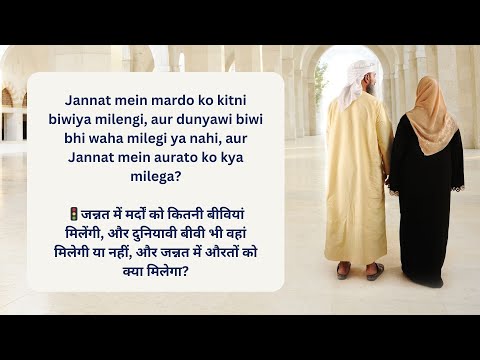
How Many Wives in Jannat for Multiple Marriages

How Many Wives in Jannat for Multiple Marriages

How many wives will men get in Jannat, and will they get worldly wives in Janat as well? What will women get in Jannat?

Question:
By: Shadab Husain Ashrafi Sahab from Durg, Chhattisgarh

I have heard that in paradise, every person will have two wives: one with whom they were married in the world and another heavenly one. The question is, for those who marry more than once, how many wives will they have in paradise?"

Answered By Mufti Muhammad Shahid Barkaati

Firstly, the idea that one receives only two wives in paradise is an incomplete picture. Islamic scriptures suggest a far more expansive scenario. For instance, it's stated that in paradise, a person will have at least 72 wives, according to some interpretations. This includes the ‘hoors’, heavenly beings superior and more special than others. These are in addition to the wives one had in the worldly life. The Quran, in Surah Al-Baqarah, verse 25, talks of gardens under which rivers flow, fruits reminiscent of those on earth, and purified spouses for the righteous, eternal residents of these gardens.

In Quran, Surah Al-Imran, verse 15, states: "Say, ˹O Prophet,˺ 'Shall I inform you of what is better than all of this? For those mindful of Allah, there will be Gardens with their Lord beneath which rivers flow, where they will remain forever, and pure spouses, along with Allah’s pleasure.' And Allah is All-Seeing of His servants."

In various Hadiths, including those in Imam Ahmad bin Hanbal and Bukhari Sharif, paradise is depicted as a place where each person will have 80,000 servants and 72 wives. The residents of paradise will shine with the luminosity of the full moon or a bright star. Unity and harmony will prevail, with no discord. Moreover, it's mentioned that the physical beauty of these wives will be such that even through 70 layers of clothing, the marrow of their bones will be visible, akin to a mixture seen in a white bottle.

The scenario regarding women with multiple marriages is nuanced. If both husbands are in paradise, she will be with them. If her husband passes away and she remarries, and both are in paradise, she can choose her companion. If a woman hasn’t married in this world, she will be wed to a man in paradise. It's narrated that in paradise, a woman will be with her last husband. Another interpretation suggests she will choose the husband who was kindest to her on earth.

Furthermore, the Hadiths state that the inhabitants of paradise will have united hearts, ensuring a harmonious existence. In situations where a spouse is not initially in paradise, intercessions and Allah's mercy can alter this, highlighting the fulfillment of desires in the afterlife.

In conclusion, Islamic teachings present a multifaceted view of marriage in paradise, encompassing both physical and spiritual dimensions. These narrations and Quranic verses aim to provide believers with a glimpse of the rewards awaiting them, encouraging righteous living in the worldly life. 


Hindi Translation:

Sawal: Maine suna hai jannat mein har shakhs ki do biwiyan hogi ek vah jise duniya mein nikah hua aur doosri jannati. Sawal yah hai ki jo shakhs ek se zyada nikah karta hai usse jannat mein kitni biwiyan milengi? 

Jawab: Dekhiye, pehli baat to yah hai ki jannat mein do biwiyan milengi, yeh baat adhuri hai. Jannat mein ek nahi balki kam se kam 72 biwiyan yahan milengi. Kuch riwayat mein zyada ka zikr hai aur sabse pehle jannat mein jane walon ko inke alawa kam se kam do biwiyan, yani do puri aisi milengi jo baki biwiyon, yani hooron se zyada khaas aur behtar hongi aur duniya ki biwiyan inke alawa hongi.

Qurane Kareem ke Part Number 1 mein Surah Bakarah ki Ayat Number 25 mein Allah Ta'ala ka irshad hai: Pyare Nabi, khushkhabri de unhe jo imaan laye aur acche kaam kiye ki unke liye baghaat hai jinke neeche nadiyan bah rahi hain. Jab unhe un baghon mein se koi phal khane ko diya jayega, soorat dekhkar kahenge yeh to wahi rizq hai jo humein pehle mila tha, halanki woh sirf soorat mein milta julta unhe diya gaya aur unke liye un baghon mein sutri pak biwiyan hain aur woh unme hamesha rahenge.


Wednesday, January 17, 2024

Can We Follow the Imam's Voice Through a Loudspeaker (Mic)?

Can We Follow the Imam's Voice Through a Loudspeaker (Mic)?

🚦लाउड स्पीकर (माइक 🎤) की आवाज़ पर नमाज़ पढ़ना?🚦Can We Follow the Imam's Voice Through a Loudspeaker (Mic 🎤) in Namaz? Exploring the intricate question of following the Imam's voice via loudspeaker (mic 🎤) in Namaaz - A comprehensive insight.


In the modern era, the use of technology in religious practices has been a matter of scholarly debate. A pertinent question that has arisen among Islamists is the legality of using loudspeakers for namaz (prayer). This article explores this complex issue in depth through an analysis of respected Muslim scholars.

The main question

The crux of the debate centers on whether it is permissible for an imam to use a loudspeaker during prayer. Although loudspeakers are commonly used for sermons (khutbas) and lectures, their use during actual prayers raises theological questions.

Opinion of leading scholars

Respected Islamic scholars have expressed different views on this issue. This question was brought to light by Israr Khan Sahib of Delhi and discussed by Mufti Mohammad Shahid Barkati of Meerut. According to Islamic law, the use of loudspeakers is considered permissible by many scholars, while others accept it.

Arguments against loudspeakers

The main argument against using a loudspeaker is that the voice generated is not the actual voice of the person speaking. It is seen as an analogy and therefore does not comply with the Shariah requirements for voice in prayer. Eminent scholars like Shehazade Ala Hazrat Mufti-e-Azam-e-Hind Hazrat Allama Mustafa Raza Khan Sahib, Allama Mufti Hashmat Ali Lucknow, Fakir Azam-e-Hindi Sadrusharia Allama Mufti Amjad Ali Azmi, and others have expressed their concerns on the matter.

The importance of authenticity

These scholars emphasize the importance of sincerity in prayer. It is argued that just as the combined voice as heard from a mountain or forest is not considered equivalent to the original voice, the voice from a speaker is not considered as the true voice of the imam and this difference affects the integrity of the prayer .

Recommendations for Worship

Where a loudspeaker is considered necessary, these scholars advise arranging for a deputy (mukabbir) to assist the imam. Ministers are instructed to trust the voice itself

Imam and deputy, not amplified sounds from loudspeakers. This proposal aims to preserve the purity and authenticity of the prayer experience.

Historical context and judgment

The argument is not just contemporary; It has historical roots. The scholar Kamaluddin Ibn Hammam, who died in 861 AH (1457 A.D.), mentioned such matters in his writings. He pointed out that a verse in the Quran requiring prostration, if heard in a resounding voice, does not make prostration obligatory. This historical perspective reinforces the distinction between direct and indirect tone (or repetition) in Islamic jurisprudence.

A practical explanation of prayer

According to scholars against the use of loudspeakers, relying on the wrong voice during prayer invalidates prayer. It is compared to other external aids, such as reciting the Qur’an from a book or a wall while praying, which are also considered invalid

A balance of tradition and modernity

The discussion highlights the broader challenge facing the religious community today: balancing tradition and modernity. While loudspeakers and other technological developments can deliver religious messages in the long run, they also raise questions about adherence to traditional practices and interpretations

As technology continues to advance, such dialogue is essential to maintain the integrity of religious practices. The perspectives of these scholars provide valuable insights for Muslims grappling with these complex issues, emphasizing the need for a careful balance between innovation and tradition.

Sunday, January 14, 2024

Nafil Namaz on Fridays of Rajab Month

Nafil Namaz on Fridays of Rajab Month

Nafil Namaz on Fridays of Rajab Month

During the month of Rajab, there's a special Friday night namaz. It involves a voluntary prayer,(Nafil Namaz), to be prayed after the Isha Namaz. This ritual is about seeking God's blessings and making personal wishes come true.


Here's how the Nafil Namaz is done: It has two parts, or Rak'ahs. In the first part, worshippers recite Surah Al-Fatiha and then the end of Surah Al-Baqarah, from 'Amana Rasul' to 'Al-Kafirun', seven times. These lines are about deep faith and asking for God's forgiveness and help.

The second part starts the same with Surah Al-Fatiha, and then goes on to the last verse of Surah Al-Hashr, repeated seven times. These lines praise Allah's power and kindness.

2 Rak'ahs of Nafil Salah on Friday Night after Isha Namaz

1) In the first Rak'ah, recite Surah Al-Fatiha followed by the last part of Surah Al-Baqarah, from 'Amana Rasul' to 'Kafirun', 7 times.

2:285: Aamanar-Rasoolu bimaaa unzila ilaihi mir-Rabbihee walmu'minoon; kullun aamana billaahi wa Malaaa'ikathihee wa Kutubhihee wa Rusulihee laa nufarriqu baina ahadim-mir-Rusulih wa qaaloo sami'naa wa ata'naa ghufraanaka Rabbanaa wa ilaikal-maseer

2:286: Laa yukalliful-laahu nafsan illaa wus'ahaa; lahaa maa kasabat wa 'alaihaa maktasabat; Rabbanaa laa tu'aakhiznaaa in naseenaaa aw akhtaanaa; Rabbanaa wa laa tahmil-'alainaaa isran kamaa hamaltahoo 'alal-lazeena min qablinaa; Rabbanaa wa laa tuhammilnaa maa laa taaqata lanaa bih; wa'fu 'annaa waghfir lanaa warhamnaa; Anta mawlaanaa fansurnaa 'alal qawmil kaafireen 

2) In the second Rak'ah, after Surah Al-Fatiha, recite the last verse of Surah Al-Hashr, from 'Huwallahu Al-Ladhi' to 'Hajeem', 7 times. 

59:22: Huwal-laahul-lazee laaa Ilaaha illaa Huwa 'Aalimul Ghaibi wash-shahaada; Huwar Rahmaanur-Raheem

59:23: Huwal-laahul-lazee laaa Ilaaha illaa Huwal-Malikul Quddoosus-Salaamul Muminul Muhaiminul-'aAzeezul Jabbaarul-Mutakabbir; Subhaanal laahi 'Ammaa yushrikoon

59:24: Huwal Laahul Khaaliqul Baari 'ul Musawwir; lahul Asmaaa'ul Husnaa; yusabbihu lahoo maa fis samaawaati wal ardi wa Huwal 'Azeezul Hakeem

After finishing with Salam, Pray (Dua) for what you deeply wish for. This Nafil Namaz on Rajab Fridays is valued for its spiritual benefits and is thought to be very good for making wishes come true. It represents a Muslim's ongoing journey to connect with the divine and the hope of having prayers answered.

4 Rak'ahs of Nafil Salah on First Friday between Zohar and Asr

In the month of Rajab, on the first Friday between the Zohar and Asr prayers, perform a 4-rakat namaz with one salam.

In each Rak'ah, after Surah Al-Fatiha, recite Ayatul Kursi (7 times) and Surah Ikhlas (5 times).

After the Salam, recite the following dua 25 times:

La Hawla Wala Quwwata Illa Billahil Kabiril Mutaali.

Then, say Istighfar 100 times:

Astaghfirullah Al-Lazi La Ilaha Illa Huwal Hayyul Qayyum, Gaffaru Zunubi Wa Satarul Uyubi Wa Atubu Ilaihi.

Following this, recite Darood Sharif 100 times and pray for all your good wishes, and the betterment of life here and in the hereafter. Insha'Allah, all your prayers will be fulfilled.

Allahumma Salli Ala Muhammadin Nabiyyil Ummi Yi Wa Aalihi Wa Barik Wa Sallim.

“O Allah! Send blessings on Muhammad, our chief the unlettered Apostle and his Family Thy favours and thy Salutations”.


Post your Comments

#Islamic Calendar 2025 Events

Islamic 2025 Event Name English Date Islamic Date
Urs Haji Malang January 2, 2025 - Thursday 10 Jumada al-Akhirah 1446
Urs Haji Ali Baba Mumbai January 4, 2025 - Saturday 12 Jumada al-Akhirah 1446
721st Urs Sharif Of Hazrat Khwaja Syed Nizamuddin Aulia Mehboob-e-Elahi Rahmatullah Alayh January 7, 2025 - Tuesday 15 Jumada al-Akhirah 1446
Urs Khwaja Gharib Nawaz, Ajmer Sharif March 24, 2025 - Monday 22 Sha'ban 1446
Lailat al-Miraj (Shab-e-Meraj) January 27, 2025 - Monday 27 Rajab 1446
Shab-e-Barat February 14, 2025 - Friday 15 Sha'ban 1446
Start of Fasting Month (Ramadan) March 1, 2025 - Saturday 1 Ramadan 1446
Lailat al-Qadr (Shab-e-Qadr) March 27, 2025 - Thursday 27 Ramadan 1446
Jummat-ul-Wida March 28, 2025 - Friday 28 Ramadan 1446
Eid-ul-Fitr March 30, 2025 - Sunday 1 Shawwal 1446
#Hajj June 6, 2025 - Friday 9 Dhul-Hijjah 1446
Eid-ul-Adha (Bakrid) June 7, 2025 - Saturday 10 Dhul-Hijjah 1446
Islamic New Year July 28, 2025 - Monday 1 Muharram 1447
Yaum al-Ashura August 6, 2025 - Wednesday 10 Muharram 1447
Eid Milad-un-Nabi September 26, 2025 - Friday 12 Rabi-al-Awwal 1447